Caracas in 3 Days
The US just carried out a special operation in Venezuela. Breaking down the historical context and what comes next.
Listen to article
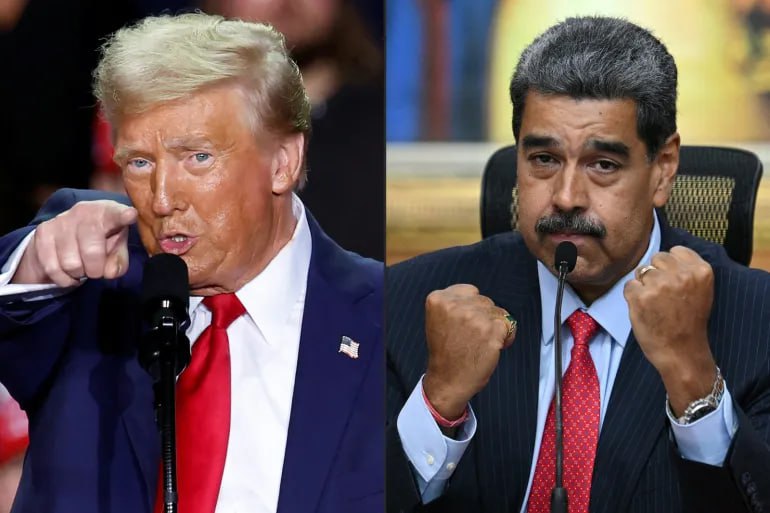
Our beloved Donnie literally just started and finished a Special Military Operation in Venezuela. The objective was clear — remove Maduro and install a “Yanukovych.”
While Viktor Fedorovich hasn’t been installed yet, I wanted to briefly break down what the US-Venezuela conflict is actually about, and why the US decided to act now.
The very short version: under the cover of drug trafficking, Uncle Donnie decided to seize the oil. For those interested in the full breakdown and my thoughts — read on.
Historical Background
Before 1999, Venezuela was an informal US ally. The state oil company PDVSA was de facto managed by US-aligned technocrats. Profits flowed into Western structures, and output was calibrated to suit American market interests.
The turning point came in 1999 when Hugo Chávez took power. He nationalized PDVSA and redirected revenues toward the state budget and social programs. He also strengthened OPEC, cut oil production to drive up prices, and signed alternative contracts with China, Russia, and Iran.
The US response was pure American style — April 2002: an attempted military coup against Chávez, organized by domestic elites with political and indirect US backing. Chávez was removed for exactly 48 hours…
Between 2002 and 2013 there was a mass purge of the officer corps, an oil strike that led Chávez to fire 18,000 workers and replace professionals with loyalists — causing industry decay. This period also saw an oil boom with prices rising from $20 to $100 per barrel, filling the budget.
Having chosen “Socialism of the 21st Century” as his ideology, Chávez pushed nationalization further:
- Energy sector
- Banks
- Agriculture
Presidential power was consolidated, term limits abolished, parliament and courts weakened. Foreign policy pivoted to Iran, Russia, China — minimizing relations with the US.
On March 5, 2013, Chávez died of cancer. His replacement was a former bus driver — Nicolás Maduro.
Maduro’s Rule (2013 — January 3, 2026)
Economy. Maduro didn’t change Chávez’s style, but lost the high oil prices and the loyalty of key elites. Manual resource distribution and a hollowed-out PDVSA produced hyperinflation and import dependency with no foreign currency reserves.
Starting in 2017, the US began imposing financial and oil sanctions, pushing the Maduro regime into pure survival mode against an already collapsed economy.
Domestic politics. Nicolás focused on the military, giving it control over ports, oil, imports — and most importantly, full immunity from prosecution. The opposition was barred from elections, its leaders arrested. The judiciary became fully controlled, parliament stripped of any political power.
All of this gave the US a clean way to remove Maduro (unlike what they did in Iraq…).
What Comes Next
As Donnie announced, Maduro has been captured and removed from the country. I expect the following scenario:
- Installation of a “Yanukovych”
- Maduro gets cyanide
- De facto control over Venezuelan oil returns to the US
The conclusion is simple: Absolute Democracy 👍
© Seal