Samsung and SK hynix Sold Expectations
China's CXMT, HBM, ordinary DRAM and DUV lithography: why the market hit Korean memory stocks and where the real threat is.
Listen to article
On July 28, the Korean market took a proper slap. The Kospi closed down 10.8%, Samsung Electronics fell 13.4%, and SK hynix dropped 14.7%. The formal trigger was simple: CXMT listed in Shanghai, jumped 466% on the first day and reached a valuation of about 3.3 trillion yuan, or more than $487 billion.
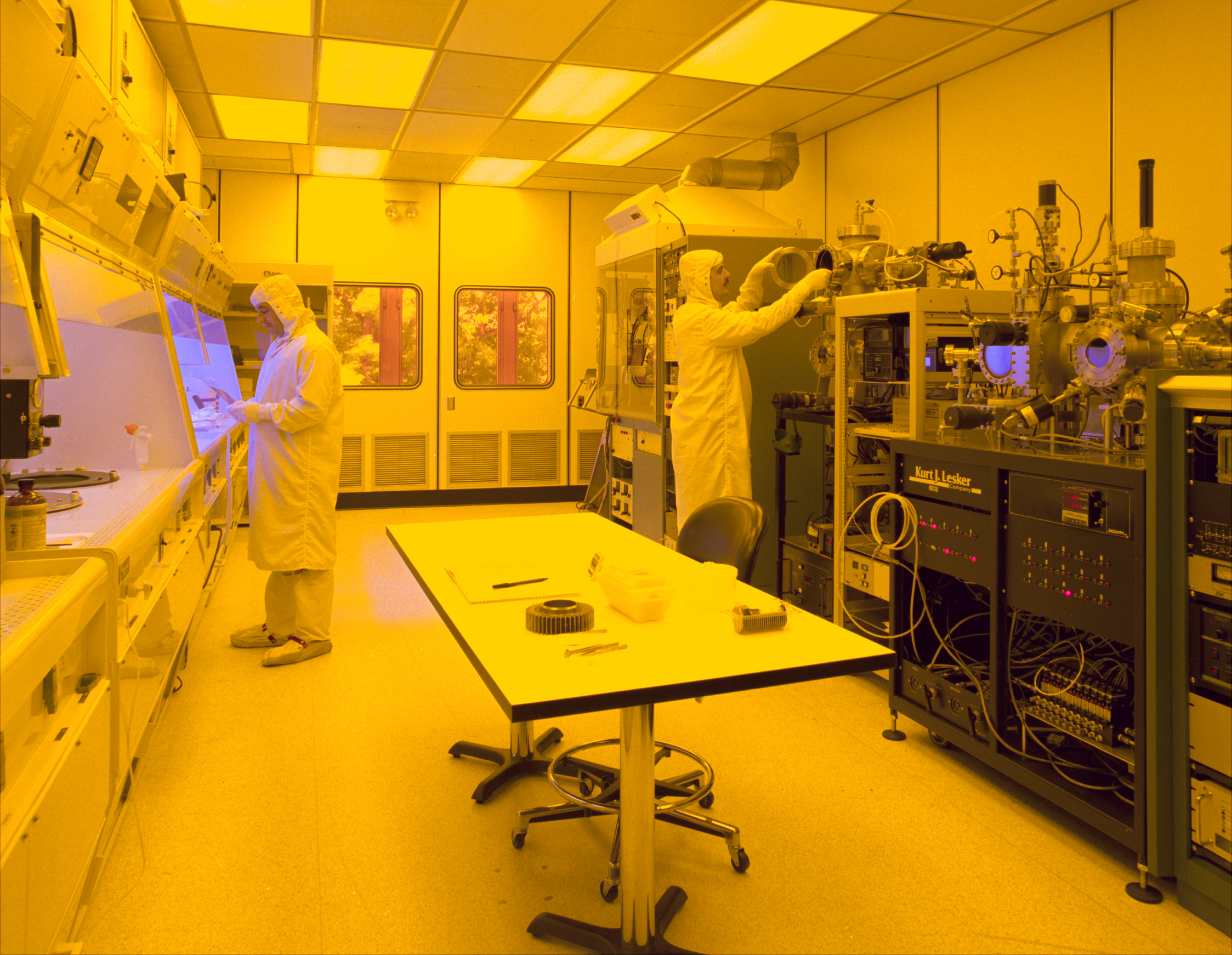
Cover: semiconductor manufacturing clean room, NASA Glenn Research Center, Photo ID GRC-1998-C-01261. Public domain, Wikimedia Commons.

On paper, this looks like “China is about to eat Samsung and SK hynix.” In reality, the story is thinner than that. CXMT is not taking the fattest piece from the Koreans yet. It is pushing into the part of the market that Samsung, SK hynix and Micron partly left themselves, because everyone ran into HBM.
HBM Took the Oxygen from Ordinary Memory
HBM is expensive memory for AI accelerators. That is where the main money is now, and that is where capacity, engineers and investment are going. SK hynix, Samsung and Micron hold that market, while ordinary DRAM for PCs, phones and servers has moved into shortage.
This is the gap CXMT entered.
Seoul Economic Daily, citing Counterpoint, wrote that in the first quarter Samsung held 38% of the DRAM market by revenue, SK hynix held 29%, Micron 22%, and CXMT had already reached 8%. A year earlier CXMT was around 3%. The growth is unpleasant, but it is still far from parity.
The main point: China does not need to win in HBM tomorrow to pressure the Koreans. It is enough to take ordinary DRAM while the leaders make money on HBM. Then Samsung and SK hynix get a choice with no good option: defend the cheap segment and lose margin, or keep focusing on HBM and give up share from below.
CXMT Did Not Arrive as Cheap Relief
The market spent a long time expecting Chinese DRAM to arrive as cheap supply and knock down prices. The current picture is worse for buyers and better for CXMT: because of the AI-driven shortage, memory is expensive almost everywhere. Chinese memory does not have to sell at a big discount if the market is already taking supply.
That is why the market did not read the CXMT IPO as a local Chinese story. It read it as a signal: China now has a public, expensive and politically needed bet on memory. Money will go into ordinary DRAM and the next generation of DRAM. ChosunBiz wrote that CXMT’s registration documents did not include a separate HBM project, and that 2025 revenue came almost entirely from commodity DRAM.
That lowers the fear that “China will wipe out HBM tomorrow.” But it raises another fear: China can methodically occupy the lower and middle floors of the memory market.
DUV Is Not a Magic Button
The second reason for the selloff was reports about Chinese DUV lithography machines. This sounds scary because lithography was the main bottleneck in the sanctions. If China learns to produce its own DUV machines at scale, dependence on ASML, Nikon and Canon becomes smaller.
But DUV is not EUV.
ASML directly separates EUV and DUV: EUV provides the highest resolution for mass production, while DUV remains the working base for a huge part of logic and memory. Older and mature processes can be made well on DUV. The densest and most profitable nodes are more expensive and harder without EUV.
Technically, it looks like this: DUV prints with a longer wavelength of light, so smaller structures require multiple passes and precise layer alignment. Every extra pass adds time, errors and cost. You can get a working product. You do not automatically get Samsung or SK hynix economics.
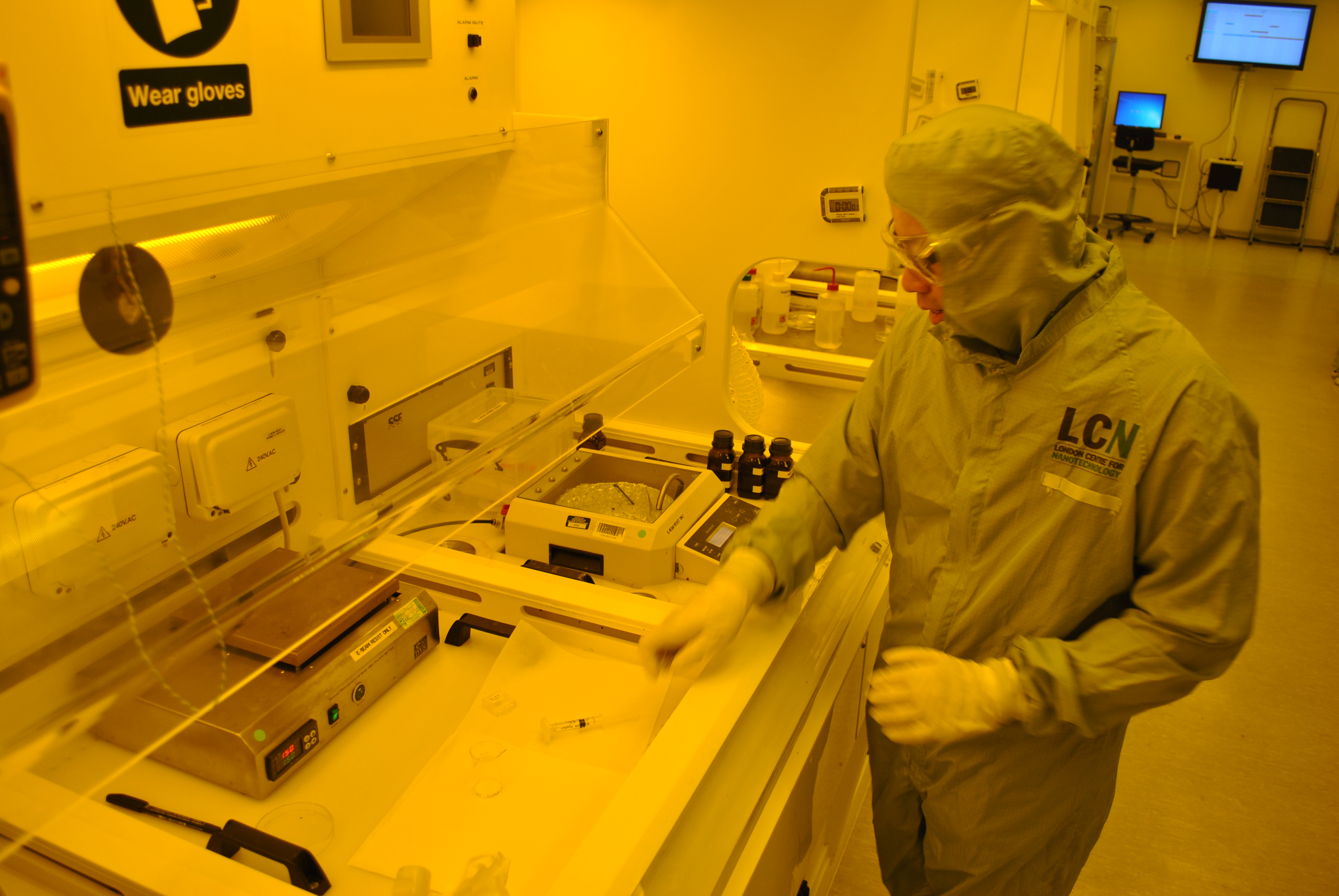
Photo: photolithography laboratory at the London Centre for Nanotechnology. Author: UCL Mathematical & Physical Sciences, photo by O. Usher. Licensed under CC BY 2.0, source: Wikimedia Commons.
.jpg)
A good example is the ASML PAS 5500/350C. EPFL describes it as a DUV stepper with a 248 nm KrF laser: the machine exposes through a reticle, steps across the wafer and repeats the process. This is industrial equipment, but even this machine does not turn DUV into an EUV replacement for every task.
What Actually Scared the Market
The market was scared by the combination, not by one fact.
First: CXMT is no longer a small subsidized project, but a company with a public valuation in the hundreds of billions of dollars. Second: AI is pulling HBM and creating a shortage in ordinary DRAM. Third: China is showing progress in equipment, even if it is still not at the level of full ASML replacement.
That is where the hit to Samsung and SK hynix came from. Their current profit depends on HBM and expensive memory. If China takes commodity DRAM, the lower floor of margin weakens. If China gradually improves the DUV chain, the sanctions ceiling gets higher. If both processes move at the same time, the market starts selling future margin protection, not today’s report.
But the panic that “China has won everything” is just as lazy as the opposite idea that “sanctions stopped everything.” CXMT is not Samsung yet. Chinese DUV is not ASML EUV yet. HBM still remains Korean-American territory.
The real story is simpler: China is hitting from below, Korea is earning from above, and the market has started to price the bottom layer again for the first time in a long while.
© Seal